I am in the SAA Platinum Lounge at OR Tambo International, waiting for my overnight flight to London, Sony WH-1000XM6 headphones on (in that Sand Pink shade, since you ask!), and the one thing I genuinely could not have done this trip without. Every flight, every connection, every long transfer: the noise cancellation is good enough to make a two-hour domestic leg feel like nothing, and the battery lasted the whole fortnight without once running out between airports when I needed it most.
Two weeks. Three countries. Six properties. The drink in front of me is cold, and I am not quite ready to leave, which is, I’ve learned, the correct feeling to end a trip like this with.
Southern Africa is one of the world’s great safari regions, and the distances across countries (even within countries) are long and often require flights. South African Airways is the airline that makes this particular circuit possible: Cape Town to KwaZulu-Natal, then via Johannesburg to Victoria Falls – Zimbabwe, and on to Zambia, then flying into Lusaka before routing back to Johannesburg, and to my own sadness, home to the UK. What follows is how two weeks across three countries works in practice, the places worth going to, and why I chose them.
A note before we begin: this is a fast itinerary. As a travel and sustainability journalist, I believe in being honest about that. I’m sharing the full circuit because it’s possible, not because speed is the goal. If you can go slower, do. What makes the routing work is SAA’s approach to rebuilding their network with measured growth and strengthening the connections that actually matter rather than chasing volume. The intra-African links that hold this itinerary together – Cape Town to Durban, Johannesburg to Victoria Falls, Lusaka back to Johannesburg are exactly the kind of regional routes they’re prioritising. And that deliberateness is what makes them reliable.
Days 1–3: Cape Town, South Africa
Stay: Your choice of city hotel
Why: South Africa’s most iconic city, and where I feel most at home (away from ‘home’). This is the starting point for any Southern African journey worth its salt.
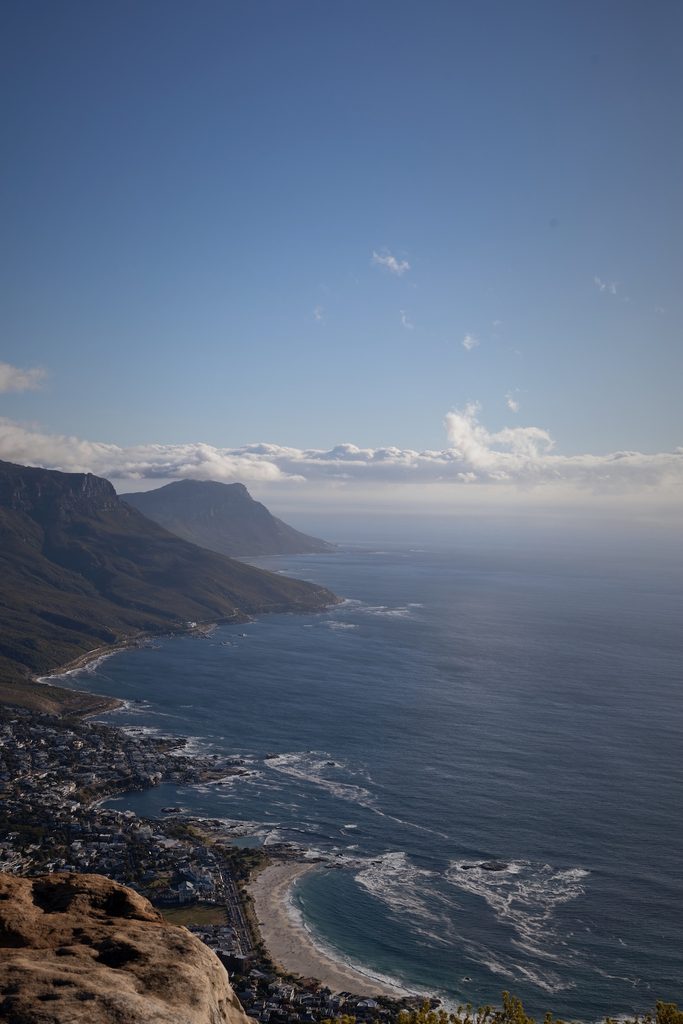
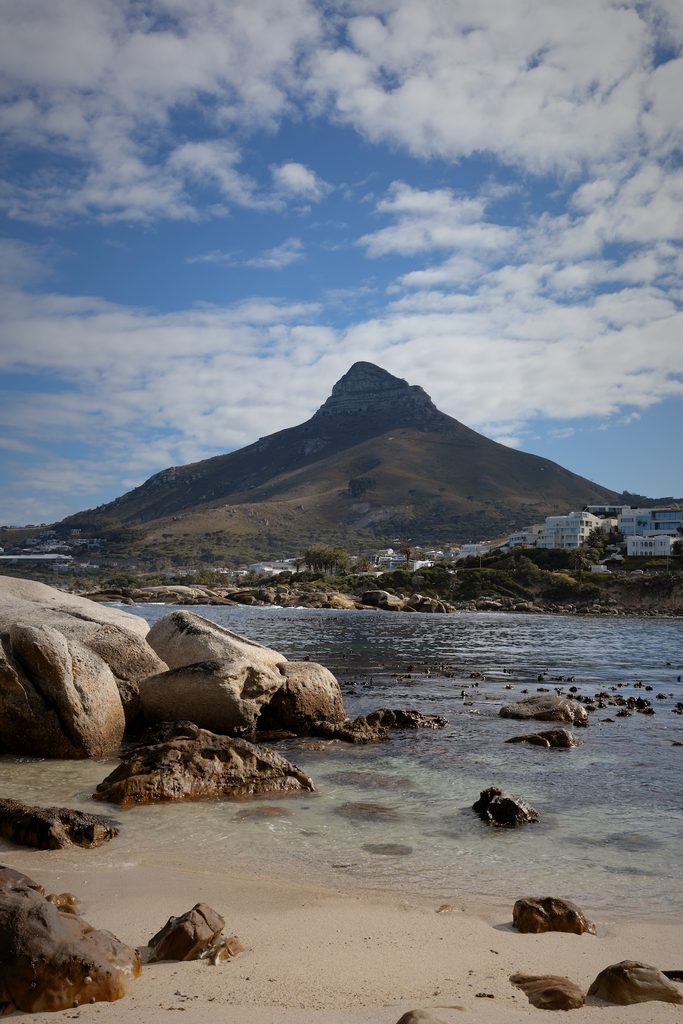
Start here. Cape Town is one of the world’s great cities and deserves more than a transit stop. Table Mountain, the Atlantic seaboard, one of Africa’s best food scenes, and a wine region forty minutes east. Two to three nights minimum. If you have longer, explore the Winelands (check out Brookdale Estate or JAN Franschhoek), Hermanus (check out Benguela Cove on the coast), or Bushmans Kloof in the Cederberg for genuine wilderness before the safari circuit even begins. Car hire is easy and affordable here, and the Western Cape rewards it.
SAA operates from Cape Town to Durban directly in partnership with CemAir, bookable on flysaa.com, putting you in KwaZulu-Natal without a Johannesburg connection.
Days 4–8: KwaZulu-Natal (KZN), South Africa
Stay: Nambiti Hills (3 nights) + Sala Beach House, Thompson’s Bay (2 nights)
Why: Malaria-free Big Five safari meets Indian Ocean coastline. The part of South Africa that the international circuit consistently underestimates.
Nambiti Private Game Reserve sits just a three-hour drive from King Shaka International: ten thousand hectares of Big Five country in rolling KZN savannah, with a community story that goes beyond the standard conservation footnote. Following a successful land claim, the reserve is now owned by the surrounding community, with representatives on the board and over three hundred people employed locally. The rewilding programme has been running for twenty-five years and wild dogs were reintroduced in late 2025. The lodge itself, recently renovated using local artisans, sits with a pool overlooking the reserve, and the game drives are excellent if you want guaranteed viewings. Three nights here.
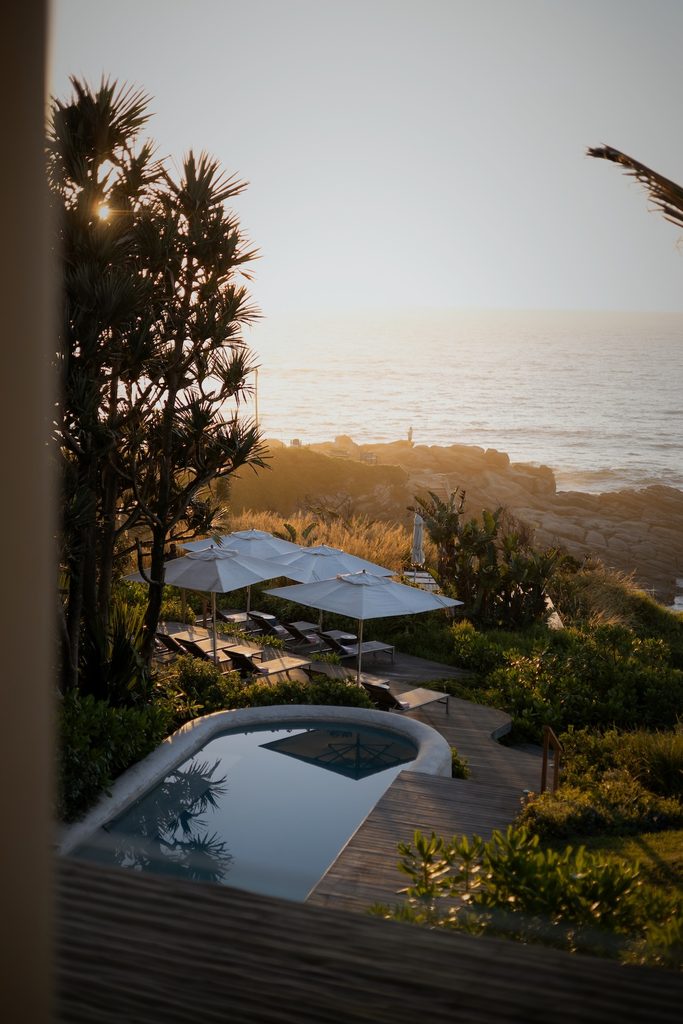
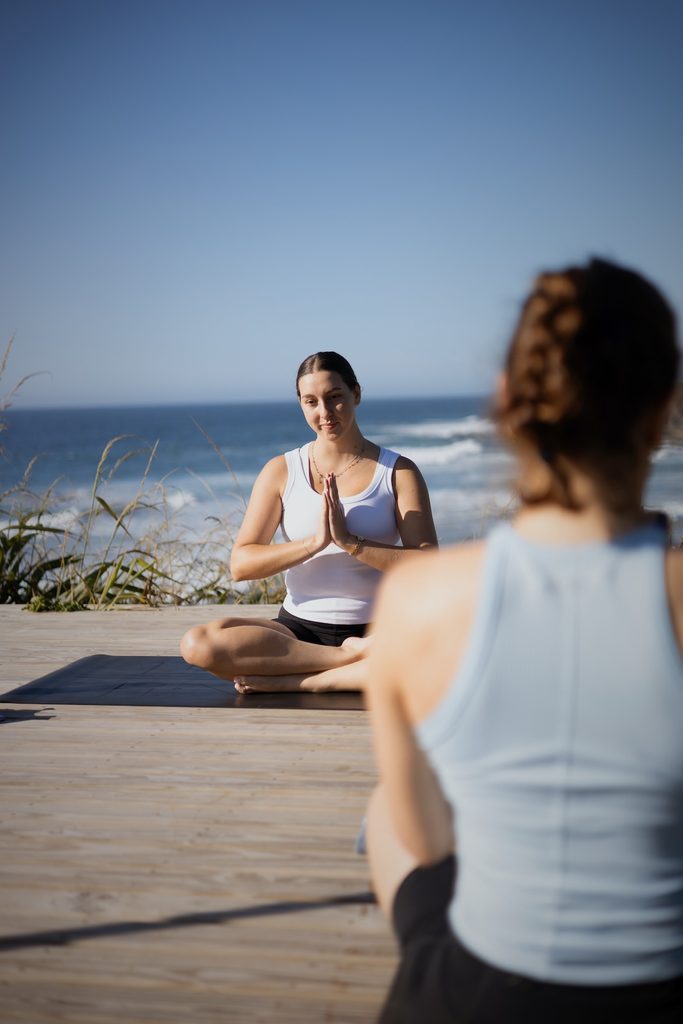
After the bush, the Dolphin Coast is the reset. Sala Beach House at Thompson’s Bay is small, private and unhurried, comprising seven suites on a protected cove, dolphins in the bay before breakfast, sunrise yoga on the rocks, a spa that comes to you rather than the other way round. It slows you down deliberately, and after the wonderful intensity of game drives, that is exactly what it is for. Two nights here before heading north.
From KZN, the route to Victoria Falls goes via Johannesburg. SAA connects Durban to Johannesburg, then Johannesburg to Victoria Falls, bookable as a through connection on flysaa.com.
Days 9–11: Victoria Falls and Zimbabwe
Stay: Victoria Falls Safari Club (2 nights) + Tsowa Safari Island, Zambezi National Park (3 nights)
Why: The gateway to wild Zimbabwe, spectacular Falls, then real wilderness upstream on the Zambezi River.
The SAA flight from KZN (Durban) to Victoria Falls connects through Johannesburg, the final leg taking under two hours. Book a window seat on the left side for the descent: the Zambezi appears from altitude first, wide and unhurried, and then the Falls themselves materialise, the mist column rising from the gorge, visible long before you land. You step off the plane into warm air and the sound of bush birds, and it takes a moment to locate yourself, which is a good sign.
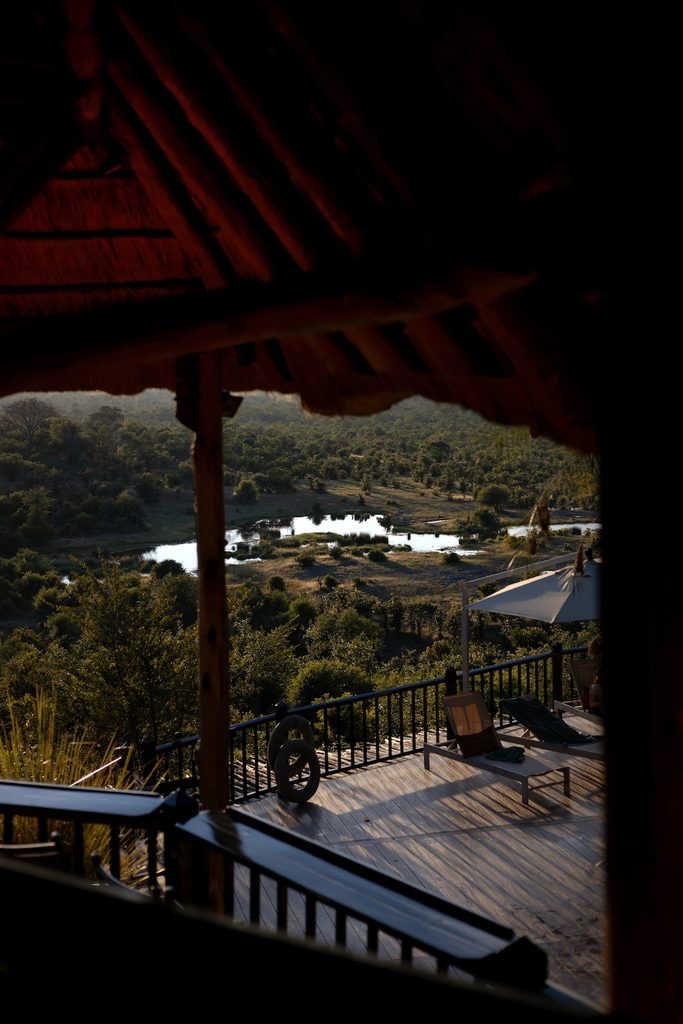
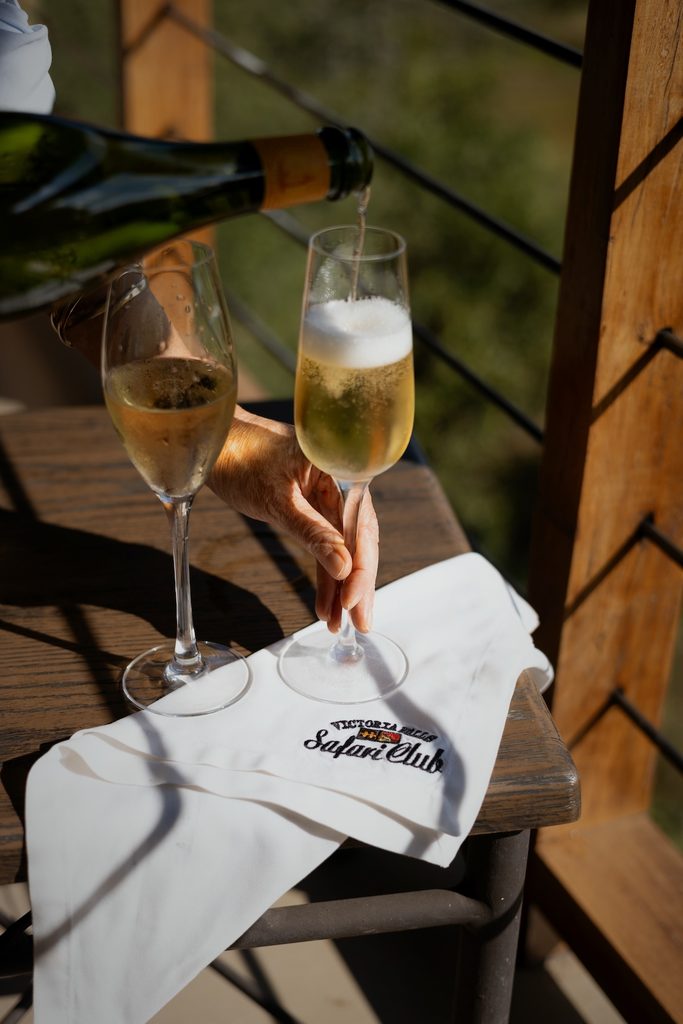
Victoria Falls Safari Club is the base in town, well-positioned, comfortable, a staging point before heading upstream. The Falls themselves are non-negotiable: most spectacular during and just after the wet season when the spray reaches you long before the edge. The Safari Club sits within the grounds of Victoria Falls Safari Lodge, founded by Dave Glynn and Ross Kennedy in 1994, voted Best Safari Lodge in Zimbabwe for twenty-four consecutive years, with serious conservation work running through the parent group including the Victoria Falls Anti-Poaching Unit, the Vulture Culture Experience and a plastic elimination programme. Dave Glynn is also a board member of Africa’s Eden, the regional responsible tourism association working across Southern Africa. Two nights here.
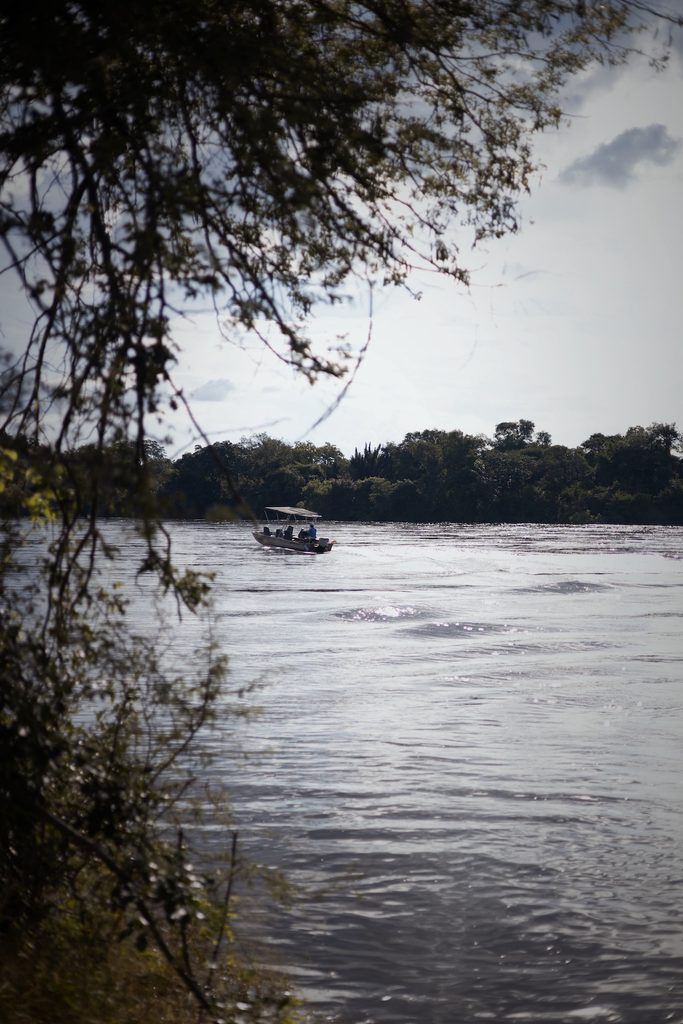
Tsowa Safari Island sits upstream within the Zambezi National Park and is accessible by 4×4 through the reserve and then a short boat crossing. Part of Isibindi Africa Lodges, nine luxury tents over the river, solar-powered, community employment built in. The wildlife is unfiltered as you are inside the national park, not adjacent to it. Three nights minimum.
UK citizens require a visa to enter Zimbabwe (at the time of writing) this is available as an e-visa before travel or on arrival. The KAZA Univisa covers both Zimbabwe and Zambia and is the recommended option for this itinerary. Always check the current requirements for your own nationality before travelling.
Days 12–14: Zambia – Lusaka and the Lower Zambezi
Stay: Lilayi Lodge, Lusaka (2 nights) + Zambezi Grande, Lower Zambezi (3 nights)
Why: Zambia’s safari is raw, unhurried and still genuinely wild; the Zambezi here, on the Zambian side, belongs to the wildlife rather than the tourism industry.
A routing note: the SAA connection from Victoria Falls to Lusaka requires a backtrack through Johannesburg. The better option is to cross overland from Victoria Falls into Zambia via the Victoria Falls Bridge. The iconic bridge that spans the Zambezi gorge, connecting Zimbabwe’s Victoria Falls town to Livingstone in Zambia. Make sure you have a transfer arranged on the Zambian side before you cross, as you’ll need someone to collect you in Livingstone. We crossed early in the morning, and it took five minutes through immigration. From Livingstone, take an internal Zambian flight up to Lusaka. This saves hours and budget and keeps the journey moving forward.
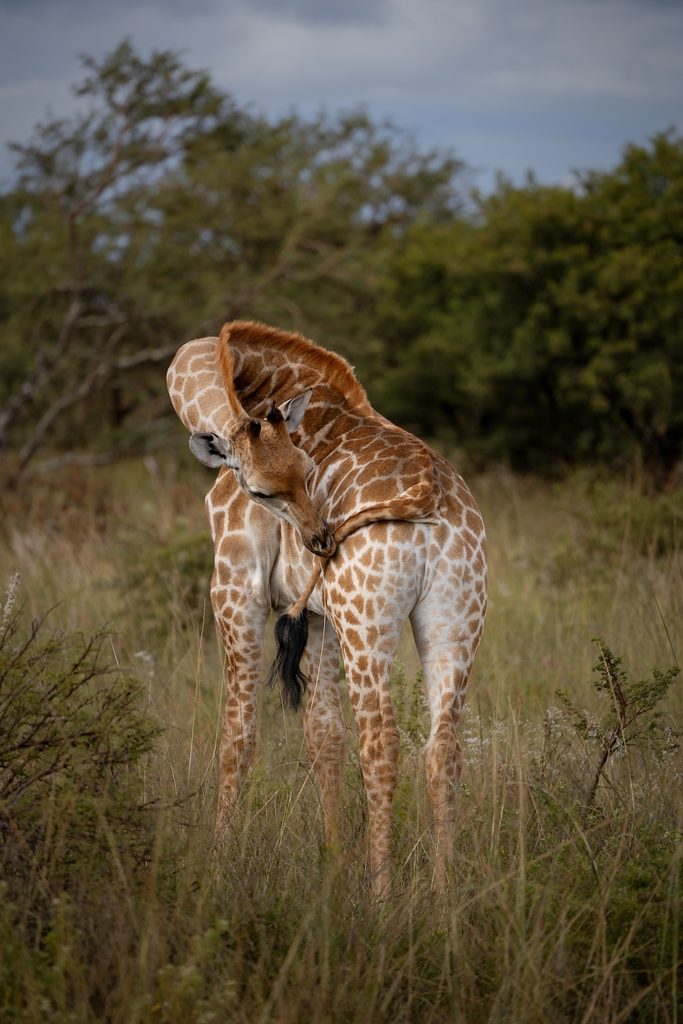
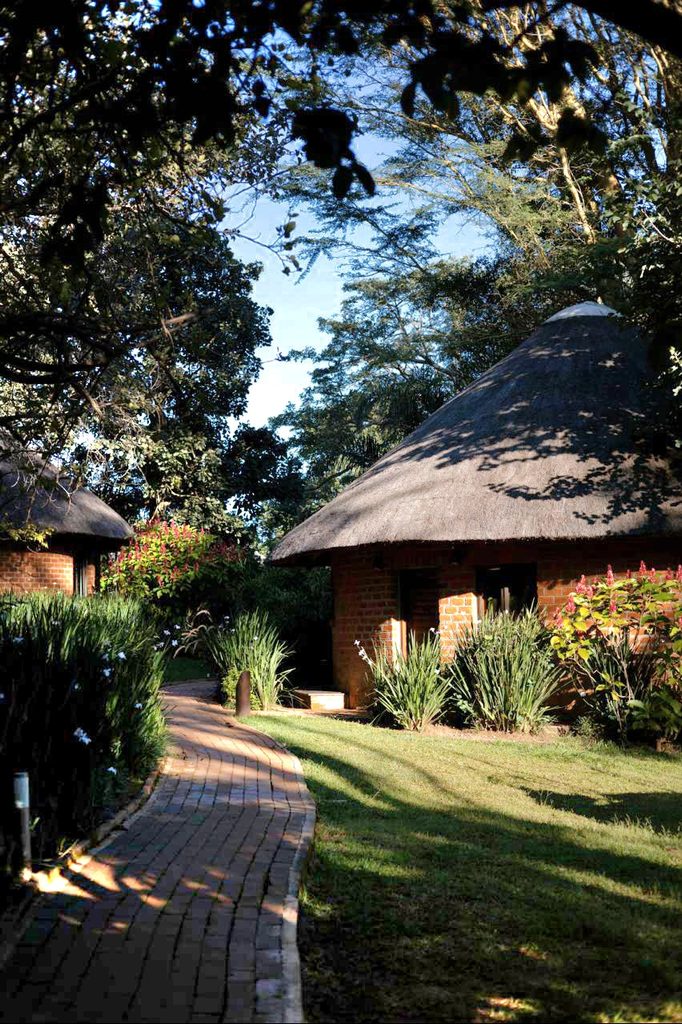
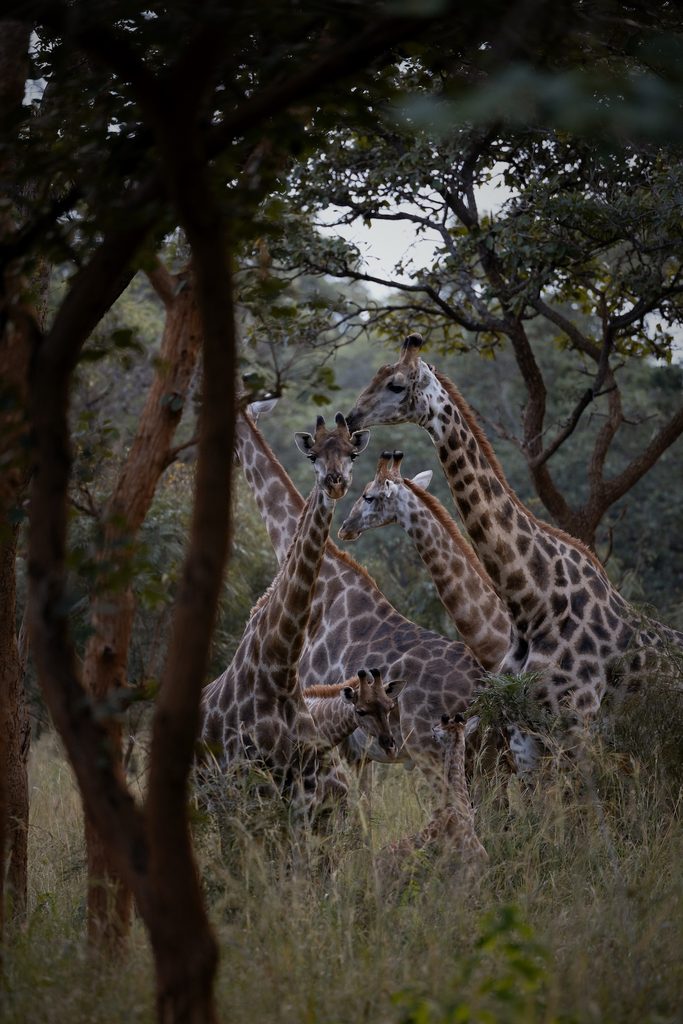
Outside Lusaka, Lilayi Lodge is the safari stopover, a private reserve without predators, which allows for game walks and trail runs alongside zebra, impala and giraffe. The lodge works closely with Game Rangers International and Conservation Lower Zambezi, and borders Lusaka National Park directly. It is not a five-star showpiece; it is a place that is genuinely part of the conservation ecosystem of this part of Zambia, with community employment and ecological management built into how it operates. Two nights.
Then the bush flight into the Lower Zambezi, and Zambezi Grande.
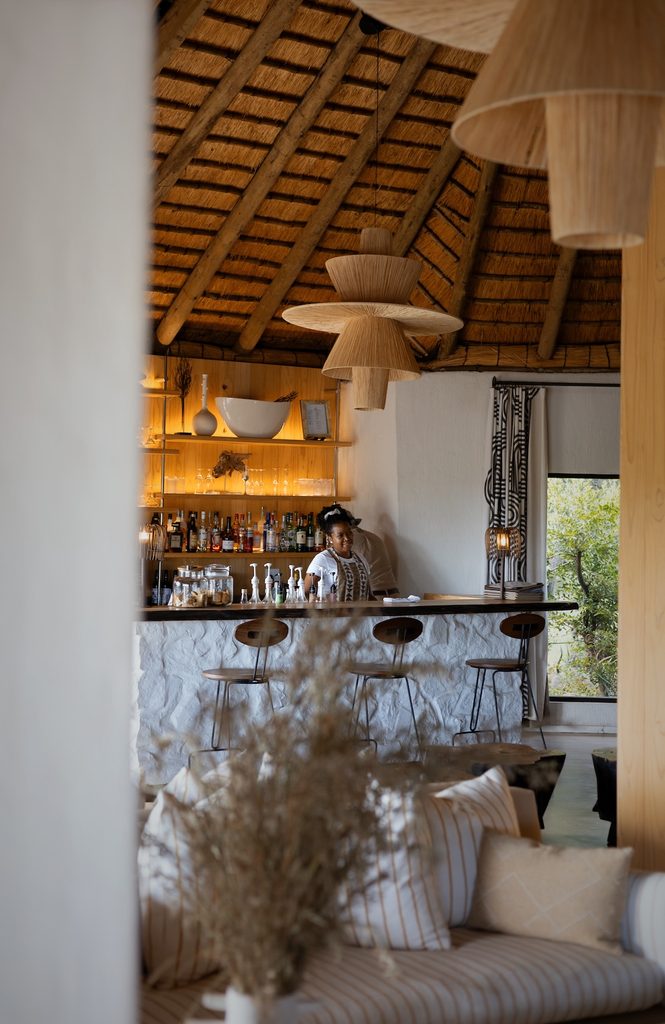
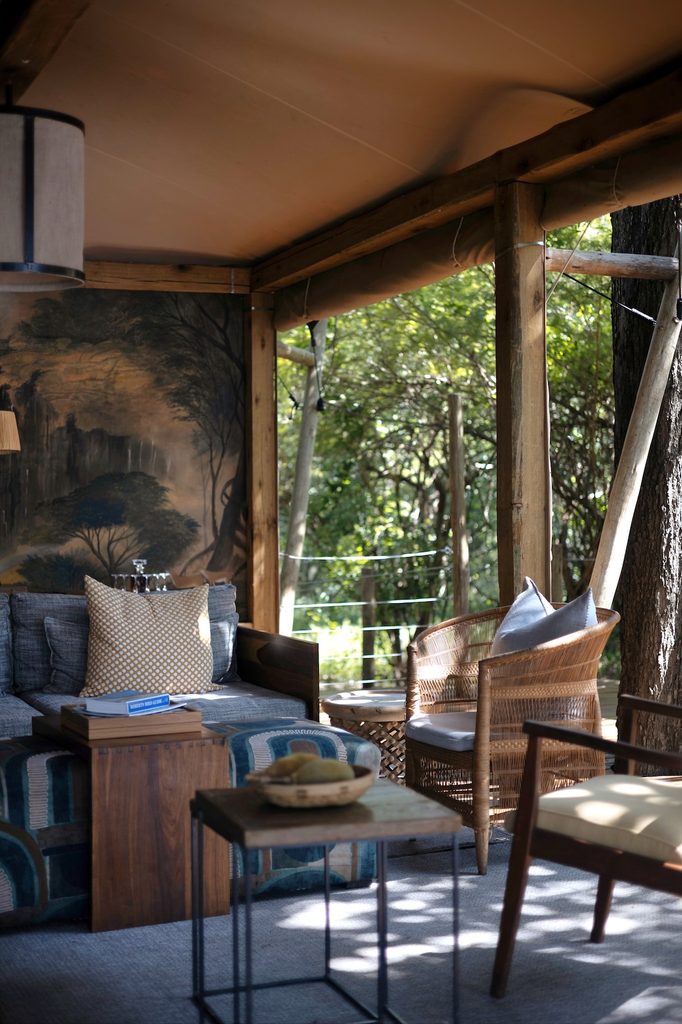
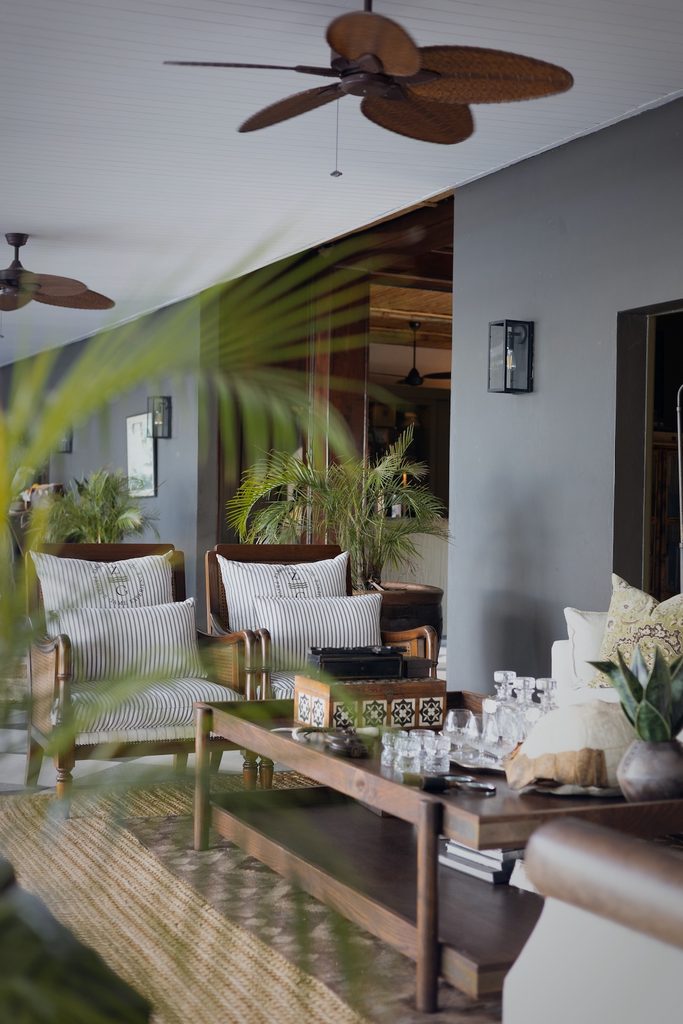
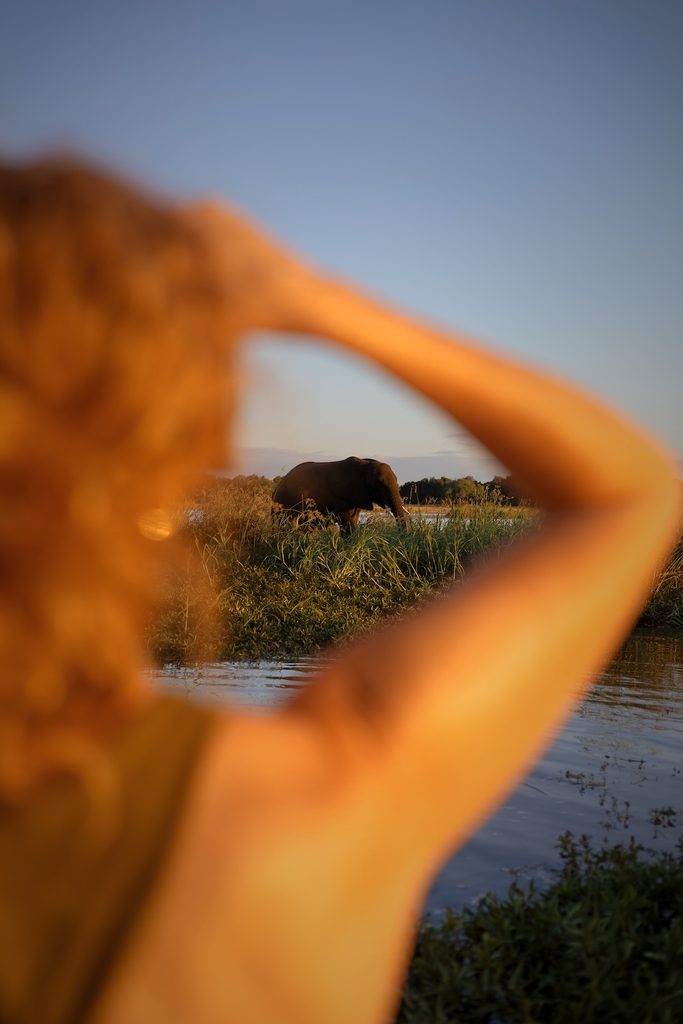
Zambezi Grande sits on the bank of the Zambezi in the Chiawa Game Management Area. Open-plan, warm, dark wood, Sheffield silver on the table, everything facing the river. The suites are some of the best I have stayed in anywhere: vast beds facing the water, outdoor showers, a daybed on the deck over the Zambezi. Henry, the resident elephant, moves through the trees below the deck while you have sundowners above him. The sunrises on the river, the game drives into the national park, the fishing at dawn with the birds going at full volume before anyone else is awake. Three nights is the minimum. Four is better.
This was my favourite property of the entire trip, and Zambia itself, the country that surprised me most. The bush here is genuinely wild and unpredictable. Dense, raw, entirely on its own terms and yet it is simultaneously one of the most peaceful places I have ever been. The guides here grew up in this valley. The staff know this river in a way that takes generations. That combination of wildness and peace, not in tension but somehow the same thing is what makes this part of the world unlike anywhere else I have been on safari.
The conservation depth is real, and it runs through everything. The lodge works with Conservation Lower Zambezi, whose work has brought elephant numbers in Lower Zambezi National Park from an estimated five hundred to between four and five and a half thousand over seventeen years. The produce comes from Zambezi Harvest, a community cooperative supplying the kitchen with vegetables grown by local farmers, the same community that the guides come from, the same valley that the wildlife moves through. It is all connected, and at Zambezi Grande you feel that connection properly.
Getting home: Lusaka to Johannesburg, SAA
The final SAA leg is Lusaka to Johannesburg, connecting to international flights at OR Tambo. The Platinum Lounge at OR Tambo for dinner, a shower, the headphones back on this is where the trip properly ends before the overnight home.
On travel, conservation and making choices that matter
Every property in this itinerary was chosen because conservation and community work is central to what it does. These are places where your presence directly contributes to something worth contributing to.
This does not erase the carbon cost of the flights, and I am not going to sidestep that. The communities and conservation programmes that protect these wild places depend on tourism income. Cutting flights (whilst necessary) is not solely the answer; choosing where that income goes is, and supporting the lodges that are doing the work.
If you can, go slower. Spend longer in fewer places. The most responsible version of travel in this part of the world is genuine engagement with place and people. Not a race through it.
SAA works with IATA on environmental management and offers passengers the option to offset emissions when booking. The airline’s post-restructuring model promotes disciplined growth, efficient fleet planning, no new routes unless they’re viable long-term and is a more honest framework than rapid expansion for its own sake. No airline is ‘green’. But the ones that grow carefully and think about what they’re building are at least asking the right questions. South Africa has significant potential as a sustainable aviation fuel producer. IATA estimates 3.2 to 4.5 billion litres annually from sugarcane by-products and invasive alien plant biomass. The routes that connect Southern Africa’s wild places to the rest of the world matter. How those routes are operated matters too.
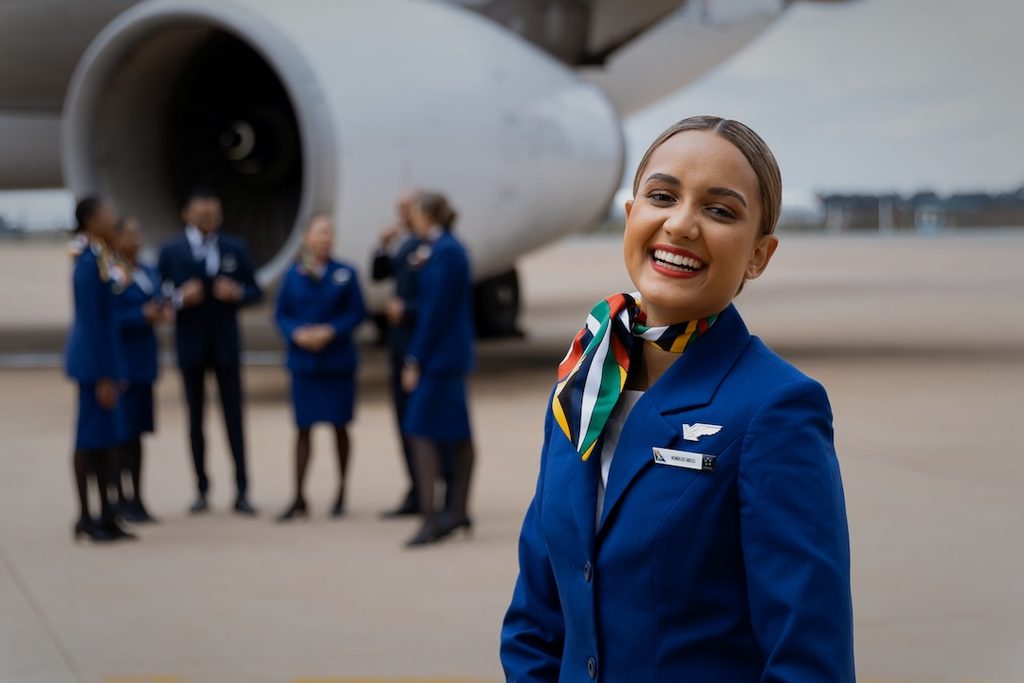
Two weeks, three countries, six properties and a routing that actually worked. That last part is not guaranteed in this part of the world, and it’s worth saying plainly: the connections held, the luggage arrived, the Lusaka flight got me back to Johannesburg in time for the overnight to London with room to spare for dinner in the lounge. SAA has been flying this continent for nearly ninety years, and the regional knowledge shows up where it counts, in the reliability of the hub, the warmth of the SAA team, and the ease of the connections. For an itinerary as specific as this one, that is the difference between a trip that works and one that doesn’t.
The itinerary at a glance
Cape Town (2–3 nights) → Durban/King Shaka, direct (SAA/CemAir) → Nambiti Hills (3 nights) + Sala Beach House, Thompson’s Bay (2 nights) → Johannesburg connection → Victoria Falls (SAA) → Victoria Falls Safari Club (2 nights) → Tsowa Safari Island, Zimbabwe (3 nights) → Victoria Falls Bridge border crossing into Livingstone, Zambia → internal flight to Lusaka → Lilayi Lodge (2 nights) → bush flight to Lower Zambezi → Zambezi Grande (3 nights) → Lusaka → Johannesburg (SAA) → London
KAZA Univisa covers both Zimbabwe and Zambia is recommended for this routing. Check visa requirements for your own nationality.
South African Airways operates Cape Town–Durban direct (SAA/CemAir codeshare), Johannesburg–Victoria Falls and Lusaka–Johannesburg, among other regional routes. All bookable via flysaa.com
Sony WH-1000XM6 headphones, available in Sand Pink, Black, Platinum Silver and Midnight Blue. RRP ZAR 10,999. Find out more here.
Image Credit: Emma Blunt Photography | www.emmablunt.com | @emma_blunt
The post Three Countries, One Airline: A South African Safari with South African Airways appeared first on The Luxury Editor.